dendrochronology
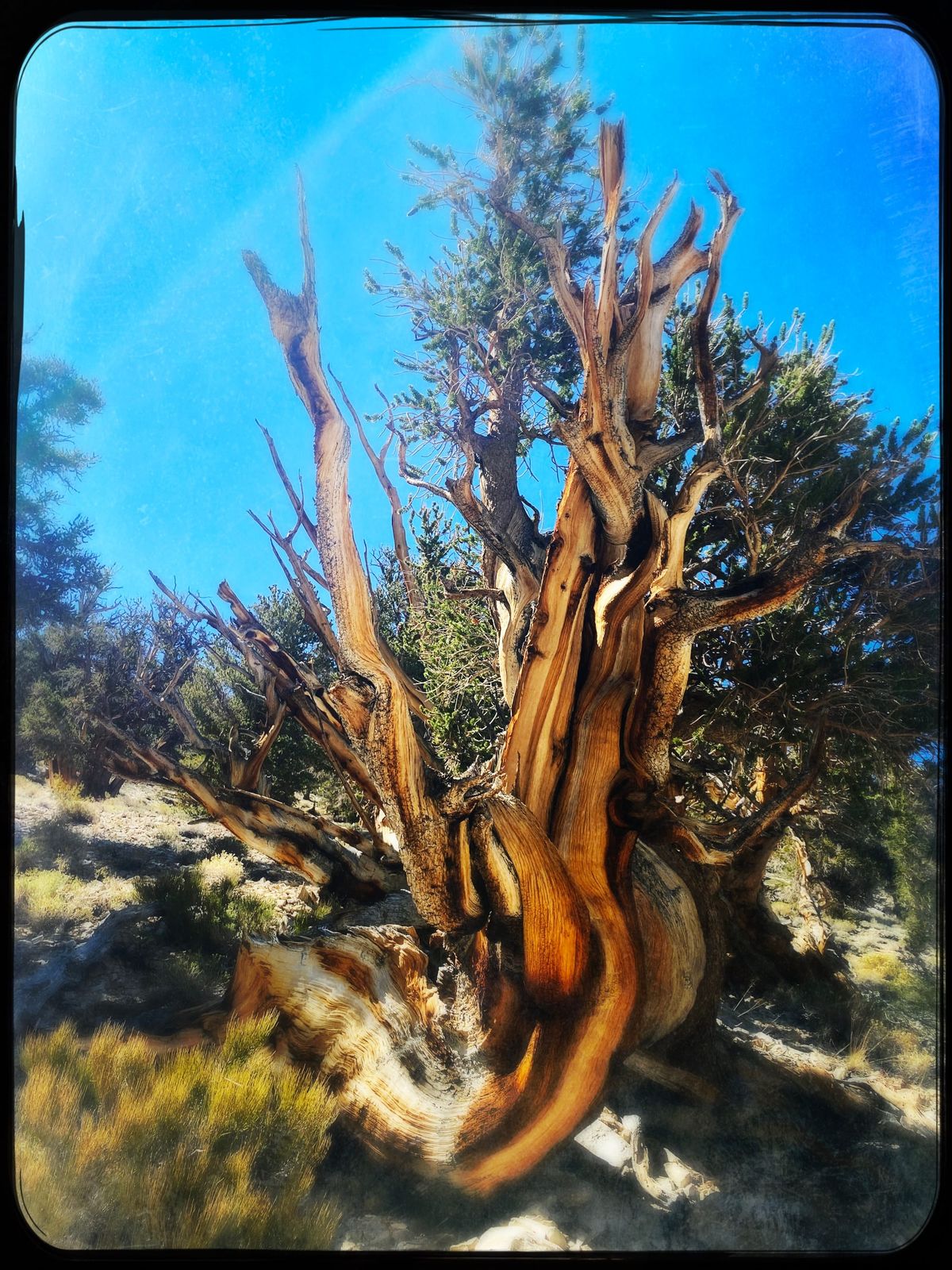
Turning fifty compelled me to turn away from society’s devaluation of age and seek alternate temporal kinship. Destination for a pro-aging pilgrimage? Ancient bristlecone pine trees. The eldest, Methuselah, over 4850 years, is the oldest living individual on Earth. A baby pinecone in 2824 BCE.
At 10,000 feet, mostly vast silence. The only sounds besides my feet crunching along the narrow trail: wind blowing through this one tree species, a solitary nutcracker scratching its beak on a branch, and the dull roar of low flying bomber jets, rehearsing future trauma.
The location of the Methuselah forest is so hostile to life that virtually nothing else grows except the bristlecones, in nutrient poor, steep dolomite slopes exposed to 100 mph winds. Their elderhood is due to, not in spite of, inhospitable conditions. Adapting with extreme slowness into wildly twisting sculptures over millenia. Evolution’s bonsai garden. Extremely dense wood self-preserves with the “resin of adversity”, immune to fire, rot, insects and infection. I greeted them in the thin brightness of our sun, itself a middle aged star.
Bristlecones’ longevity spawned the field of tree-ring dating, dendrochronology, that gleans environmental conditions spanning thousands of years. Concentric windows into past climates. Dendron, the Greek word for tree, is the etymological root of dendrites, the branching structures of our nerve cells.
Awe-soaked, we shouted with astonishment and whispered praises. My relatively young mammal hands touching deep time sentinels. All relative. Thanked them for all they teach about growing old and growing outrageously in the worst conditions.